Food Allergies in Korea: A Complete Travel Guide (2026)
A complete guide to managing food allergies in South Korea — Korea's 18 regulated allergens, hidden allergens in Korean cuisine, how to communicate your restrictions in Korean, peanut and nut allergy tips, and safe dining in Seoul.
South Korea has one of the most distinctive and flavorful food cultures in the world — and one of the most challenging to navigate with food allergies. Sesame oil is a finishing ingredient in almost every dish. Kimchi contains fermented shrimp or anchovy. Most soups are built on seafood-based broths that are invisible in the final dish.
This guide covers everything you need to know about food allergies in Korea: which allergens are regulated, where they hide in Korean cuisine, how to communicate restrictions to restaurant staff, and how to dine safely in Seoul and beyond.
Korea's 18 Regulated Allergens
South Korea's Food Allergy Labeling Act requires packaged food manufacturers to disclose 18 major allergens:
| # | Allergen | Korean |
|---|---|---|
| 1 | Eggs | 난류 |
| 2 | Milk | 우유 |
| 3 | Buckwheat | 메밀 |
| 4 | Peanuts | 땅콩 |
| 5 | Soybeans | 대두 |
| 6 | Wheat | 밀 |
| 7 | Mackerel | 고등어 |
| 8 | Crab | 게 |
| 9 | Shrimp | 새우 |
| 10 | Pork | 돼지고기 |
| 11 | Peaches | 복숭아 |
| 12 | Tomatoes | 토마토 |
| 13 | Sulfites | 아황산류 |
| 14 | Walnuts | 호두 |
| 15 | Chicken | 닭고기 |
| 16 | Beef | 쇠고기 |
| 17 | Squid | 오징어 |
| 18 | Clams | 조개류 |
Korea's 18-allergen list is notably broader than the 9 required in the US, including some less common items like peaches, tomatoes, pork, and mackerel. For travelers, the most practically important ones are soybeans, wheat, sesame, shrimp, and crab — these appear in the widest range of Korean dishes.
Note that sesame is not on this list despite appearing in virtually every Korean meal. Sesame gained mandatory labeling status in Korea only recently, and many food industry practices have not fully caught up. Always mention sesame oil (참기름) explicitly on your allergy card.
Korea's 5 Most Dangerous Hidden Allergens
1. Sesame Oil (참기름 — chamgireum)
Sesame oil is the single most pervasive hidden allergen in Korean cuisine. It is not merely a cooking oil — it is a finishing condiment added to almost every savory dish after cooking. Bibimbap, japchae, namul (seasoned vegetable side dishes), rice bowls, and most banchan are dressed with sesame oil. Staff who say a dish "doesn't use sesame" often mean whole sesame seeds, not the oil — be explicit.
2. Soybean Paste (된장 — doenjang)
Doenjang is fermented soybean paste — Korea's equivalent of miso. It forms the base of doenjang jjigae (one of Korea's most popular soups), is used as a marinade for meat, and appears in numerous dipping sauces and salad dressings. Doenjang contains both soy and trace wheat from the fermentation process.
3. Seafood Broth (해물 육수 — haemul yuksu)
Many Korean dishes that appear to be meat-based or vegetarian are built on seafood broth. Kimchi is traditionally made with fermented shrimp paste (새우젓 — saeujeot) or anchovy sauce (멸치액젓 — myeolchi aekjeot). Doenjang jjigae, miyeok guk (seaweed soup), and sundubu jjigae (soft tofu stew) often use anchovy or dried shrimp as a flavor base. Even bibimbap may contain broth components with seafood.
4. Perilla (들깨 — deulkkae)
Perilla (also called Korean sesame leaf or kkaennip) is a common garnish and cooking ingredient in Korean cuisine. It is botanically related to sesame and cross-reacts with tree nuts in some individuals. Perilla seeds (들깨) are used in soup thickening and in dipping sauces at Korean BBQ restaurants. If you have tree nut or sesame allergies, mention perilla explicitly.
5. Gochujang and Soy Sauce (고추장 / 간장)
Korea's two most essential condiments both contain allergens that travelers may not expect. Gochujang (red pepper paste) contains glutinous rice flour and in many commercial versions, wheat. It is used in tteokbokki, bibimbap sauce, and countless marinades. Ganjang (soy sauce) contains soybeans and wheat, and is used in virtually every savory Korean sauce and marinade.
10 Korean Dishes That Hide Common Allergens
1. Kimchi (김치)
Korea's most iconic dish is fermented cabbage — but the fermentation base almost always contains shrimp paste (새우젓) or anchovy sauce (멸치액젓). Vegan kimchi exists but must be specifically requested. Even in restaurants that serve vegetarian food, kimchi is often made the traditional way unless the kitchen specifically caters to vegans.
Hidden allergens: shellfish (shrimp/anchovy), sometimes wheat.
2. Bibimbap (비빔밥)
Mixed rice with vegetables, protein, and gochujang sauce. Each component is individually cooked and dressed — typically with sesame oil — before being assembled. The gochujang sauce contains chili, fermented soybeans, and often wheat starch. The broth used to cook the rice may be seafood-based.
Hidden allergens: sesame, wheat (gochujang), potentially shellfish broth.
3. Doenjang Jjigae (된장찌개)
Fermented soybean paste stew — Korea's most common home-cooked meal. The paste base contains soy and wheat. The broth is almost always made from anchovies and dried kelp. Tofu (soy) is a standard ingredient.
Hidden allergens: soy, wheat, shellfish (anchovy broth).
4. Tteokbokki (떡볶이)
Spicy rice cakes in gochujang sauce. Standard tteokbokki also includes fish cakes (어묵 — eomuk), which are processed fish products. The gochujang sauce contains wheat. Fish cakes may also contain shellfish.
Hidden allergens: wheat (gochujang), fish, shellfish.
5. Korean BBQ (삼겹살 / 갈비)
The grilled meat itself may be safe, but the marinades and dipping sauces routinely contain sesame oil, soy sauce (wheat + soy), and sometimes shellfish-based sauces. The ssam (lettuce wraps) accompaniments include doenjang and gochujang dips. Shared grill plates can create cross-contamination if not replaced between customers.
Hidden allergens: sesame, soy, wheat, shellfish (in sauces).
6. Japchae (잡채)
Glass noodle stir-fry with vegetables and meat, finished with sesame oil and soy sauce. The noodles are made from sweet potato starch (naturally gluten-free), but the seasoning sauce contains wheat-based soy sauce.
Hidden allergens: sesame, soy, wheat.
7. Pajeon (파전)
Korean savory pancakes made with a wheat flour batter, eggs, and scallions. Seafood pajeon (해물파전) is one of the most popular varieties and contains shrimp, squid, or clams. Even plain scallion pajeon uses a wheat-egg batter fried in sesame oil.
Hidden allergens: wheat, eggs, sesame, shellfish (in seafood versions).
8. Sundubu Jjigae (순두부찌개)
Soft tofu stew — the tofu itself is soy-based, and the broth is typically made with anchovies and dried kelp. Seafood versions add clams, shrimp, or oysters. Even "vegetarian" versions at non-specialist restaurants often use anchovy broth.
Hidden allergens: soy (tofu), shellfish (broth and seafood additions).
9. Kimbap (김밥)
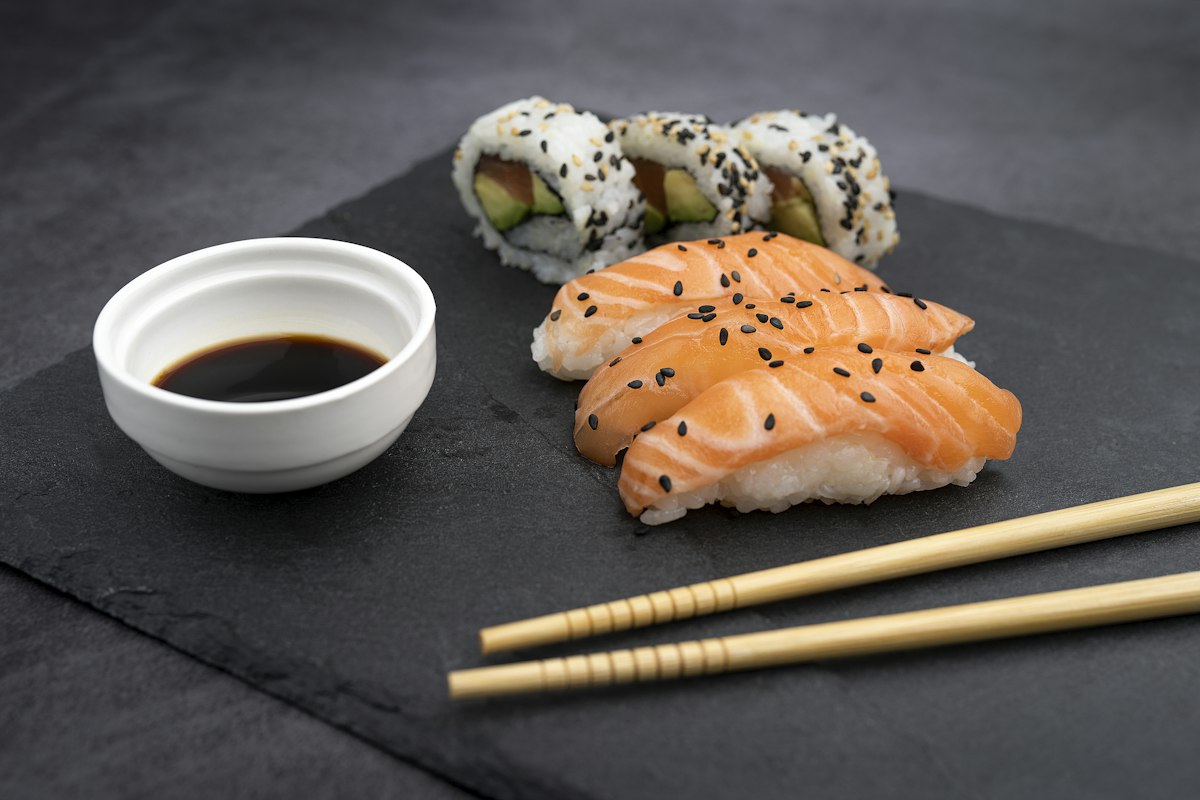
Korean rice rolls — outwardly similar to sushi but with different fillings. Standard kimbap contains imitation crab (which may include real crab extract), eggs, and is rolled in sesame oil-coated rice. The rice itself is seasoned with sesame oil and salt.
Hidden allergens: sesame, eggs, shellfish (imitation crab).
10. Banchan (반찬)
The communal side dishes served at every Korean meal are perhaps the highest-risk allergen encounter for travelers. Each small dish has its own ingredients, many of which contain sesame oil, fish paste, soy sauce, or shellfish broth. Banchan are refillable without being asked — staff may not think to warn you about allergens in each one. Always ask before eating.
Hidden allergens: varies, but sesame oil appears in most; shellfish-based seasonings are common.
How to Tell a Korean Restaurant About Your Food Allergy
Key Korean Phrases
Opening statement:
저는 식품 알레르기가 있어요. (Jeoneun sikpum allereugiga isseoyo.) "I have food allergies."
Asking about a specific allergen:
이 음식에 [allergen]이/가 들어 있나요? (I eumsige [allergen]i/ga deureoissnayo?) "Does this dish contain [allergen]?"
Common allergen names in Korean:
- Sesame oil: 참기름 (chamgireum)
- Sesame seeds: 깨 (kkae)
- Shrimp: 새우 (saeu)
- Peanuts: 땅콩 (ttangkong)
- Wheat / gluten: 밀 / 글루텐 (mil / geulluten)
- Soybeans: 대두 (daedu)
- Eggs: 달걀 (dalgyal)
Requesting no cross-contamination:
교차 오염도 안 됩니다. (Gyocha oyeomdo an doemnida.) "Cross-contamination is also not acceptable."
If your allergy is severe:
아나필락시스가 올 수 있어서 매우 심각합니다. (Anapillaksiseu ga ol su isseoseo maeyu simgakamnida.) "I could have a life-threatening reaction."
Why a Written Card Works Better Than Speaking
In Korean restaurants, the person taking your order and the people cooking your food are usually different — and often in separate rooms. Even if your server understands your restriction, the message may not transfer accurately to kitchen staff. A written Korean allergy card that can be physically handed to kitchen staff eliminates this relay problem.
Korean restaurant staff are generally attentive and willing to accommodate once they understand a restriction clearly. The challenge is precision: saying "I'm allergic to seafood" may not communicate the risk of anchovy broth, shrimp paste in kimchi, or fish cakes in tteokbokki unless your card explicitly names them.
Peanut and Tree Nut Allergies in Korea
Peanut allergy in Korea presents different risks than in Southeast Asia. Korea does not use peanut oil as a primary cooking medium. The main peanut encounters are:
- Peanut sauce on cold noodles (비빔국수 — bibim guksu) or as a dipping sauce at some restaurants
- Peanut-topped desserts — bingsu (shaved ice) is sometimes garnished with crushed peanuts
- Packaged snacks — many Korean snacks contain peanuts or are processed in facilities with peanuts
- Honey butter flavoring — a popular Korean snack flavor that is sometimes processed alongside nut products
Tree nut allergies face lower risk from traditional Korean cuisine, but walnut (호두 — hodu) appears in some traditional rice cakes and pastries. Walnuts are one of Korea's 18 regulated allergens, reflecting their use in the local food culture.
Perilla cross-reactivity: If you have a tree nut allergy and also react to sesame, be aware that perilla (들깨) may trigger similar reactions in some individuals. Mention it on your card.
Dining Safely in Seoul: Practical Tips
At Korean BBQ restaurants: Ask for a fresh, clean grill plate before your meat arrives. Shared grills accumulate residue from previous customers. Most Korean BBQ restaurants will accommodate this request without issue.
Banchan awareness: Before touching the communal side dishes, ask what they contain. The phrase "이게 뭐예요?" (ige mwoyeyo?) — "What is this?" — is a useful opener. Then show your card.
Convenience stores (편의점): Korean convenience stores (GS25, CU, 7-Eleven, Emart24) label packaged food with all 18 regulated allergens. Look for the 알레르기 유발물질 (allergen-containing substances) section on packaging — it lists which of the 18 are present in bold.
Street food markets (시장): Markets like Gwangjang in Seoul and Jagalchi in Busan are high-risk environments for allergy management due to open-air cooking, shared equipment, and minimal English communication. Opt for sit-down restaurants with visible kitchens when managing serious allergies.
App-based translation: Google Translate's camera mode can help you read Korean ingredient labels in real time. Use it alongside your allergy card, not instead of it.
Hotel assistance: Ask your hotel concierge to write a note in Korean explaining your allergy. This is especially useful at restaurants that are not used to foreign guests — having a local-looking explanation alongside your allergy card increases the chance that staff take it seriously.
Booking ahead: For restaurants with set menus (omakase or traditional Korean table d'hôte), email the restaurant in advance with your allergy card attached. Many upscale Korean restaurants are very accommodating when given advance notice.
Create Your Korean Allergy Card
The most reliable tool for navigating food allergies in Korea is a bilingual English-Korean allergy card (알레르기 카드) — a professionally formatted card listing your specific allergens with the correct Korean terminology, cross-contamination warnings, and severity level.
Create your Korean allergy card: select your allergens, preview it for free, then download as PNG or PDF before your trip. The card explicitly names sesame oil, shrimp paste, anchovy broth, and other Korea-specific hidden allergens — not just generic allergen names.
Korea has incredible food. With clear communication tools and a few key phrases, you can eat confidently at Korean BBQ, street markets, and family restaurants throughout your trip.
著者

カテゴリ
その他の記事

2026年版 食物アレルギーカード比較:SelectWisely vs Equal Eats vs AllergyCard
2026年の主要食物アレルギーカードサービスを徹底比較。機能、対応言語、価格、使いやすさから最適なツールを見つけましょう。

海外旅行のアレルギーカード:渡航先別の言語と注意点(2026)
海外旅行で使う食物アレルギーカードを渡航先別に解説。韓国・タイ・台湾・ヨーロッパ・英語圏それぞれで必要な言語と、日本人が見落としやすい現地特有のリスクをまとめました。
日本旅行アレルギーカード完全ガイド:食物アレルギーを持って日本を旅する必携ガイド
日本を旅行するアレルギーをお持ちの方の必読ガイド。隠れたアレルゲンの解説、日本語アレルギーカードの作成方法、レストランでのコミュニケーション術、日本旅行者が知っておくべき実用情報を網羅。
ニュースレター
コミュニティに参加
最新のニュースやアップデートをお届けするニュースレターにご登録ください